Laser cutting machine for continuous machining with variable contours

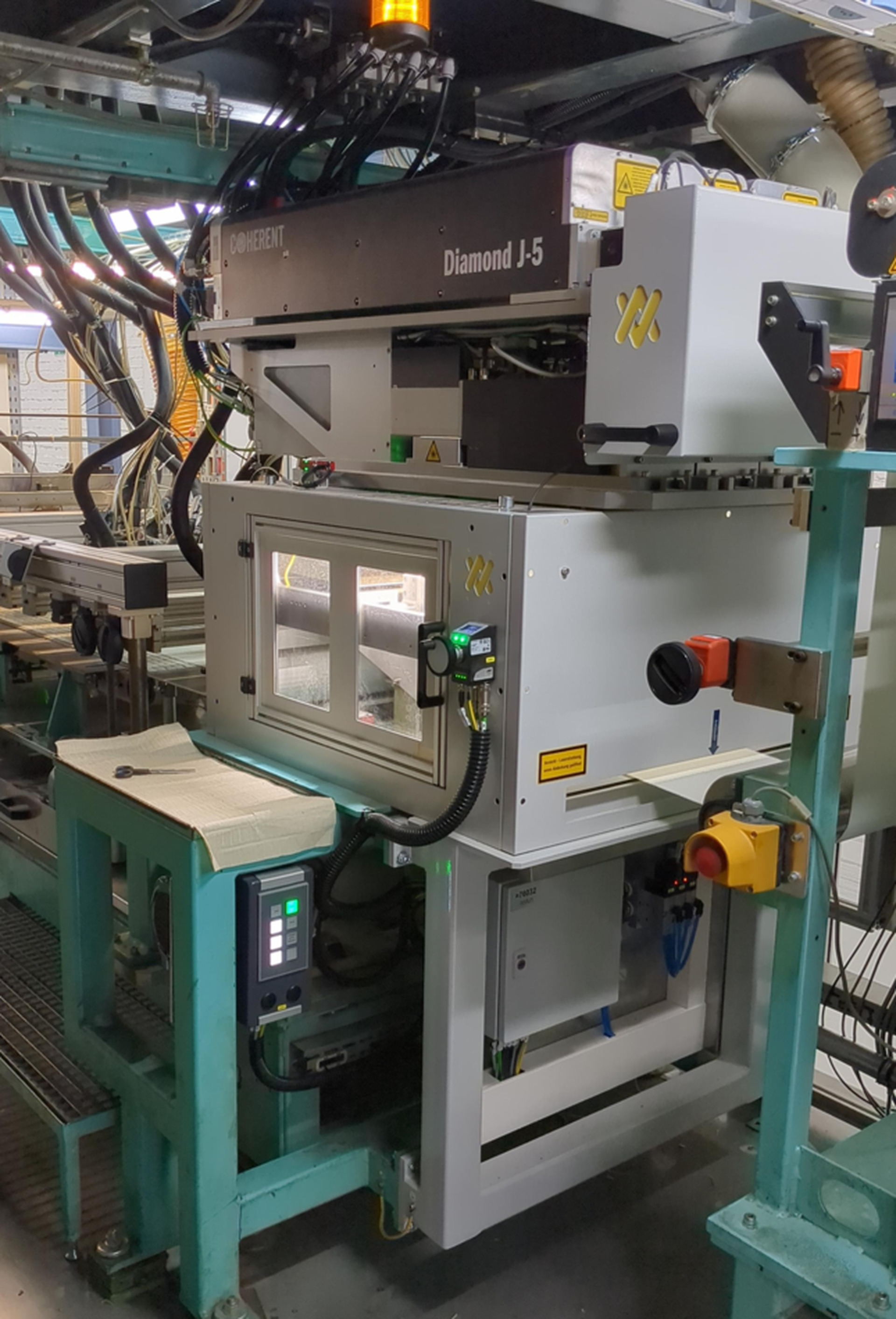
The system cuts contours into air filter bellows on a continuously running conveyor belt at a line speed of 150 m/min. It forms part of a continuous production line and is controlled via the line's control system, thereby eliminating the need for a dedicated operator station.

The system has a modular design: three modules arranged side by side collectively cover the entire working width, each equipped with a CO₂ laser, a 3-axis scanner and the associated control system. The scanning fields overlap, ensuring that contours are cut continuously even across module boundaries. Each module is individually accessible for maintenance without the need to dismantle the entire cutting area. The 3-axis scanners allow the cutting contour to be changed via the recipe without the need for mechanical retooling.

At this speed, the real challenge lies in path guidance. Targeted airflows stabilise the material in the cutting area whilst simultaneously removing the waste in a controlled manner. Deionisation prevents cutting residues from adhering electrostatically to the material or the system - a prerequisite for trouble-free continuous operation within the production line.
1161
1131

Cutting systems for lithium-ion cell production

Two independent production lines for the manufacture of electrodes and separators - both based on shared roll-to-roll components, but distinguished by the processing tools tailored to the respective materials.

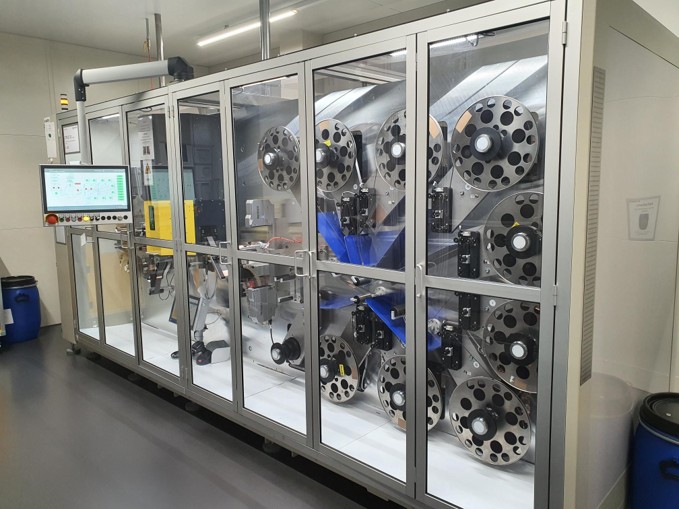
The laser cutting system processes anode and cathode electrode strips. The wide strip is slit into twelve strips: the ten narrow strips are guided with precision and wound onto separate reels. The non-contact laser process delivers high-quality cut edges with reproducible results. The fully automatic cutting machine processes separator strips. Here, a blade cutting unit slits the wide strip into ten narrow strips, which are also wound individually.

In both systems, the edge-cut strips produced on the left and right are specifically directed into collection bins in the extraction area. The edge-cut material is thus removed from the process in a controlled manner without affecting the strip guidance of the narrow strips. Strip guidance, winding technology and system control are based on the same R2R platform. For the operator, this means consistent operating logic and a shared spare parts pool across both material streams, whilst the cutting tool - laser or blade - remains tailored to the respective material. Both systems are designed for single-operator use: the largely self-sufficient, process-reliable operation allows a single operator to monitor several systems simultaneously.

Roller knife cassette – cutting module for separator and electrode

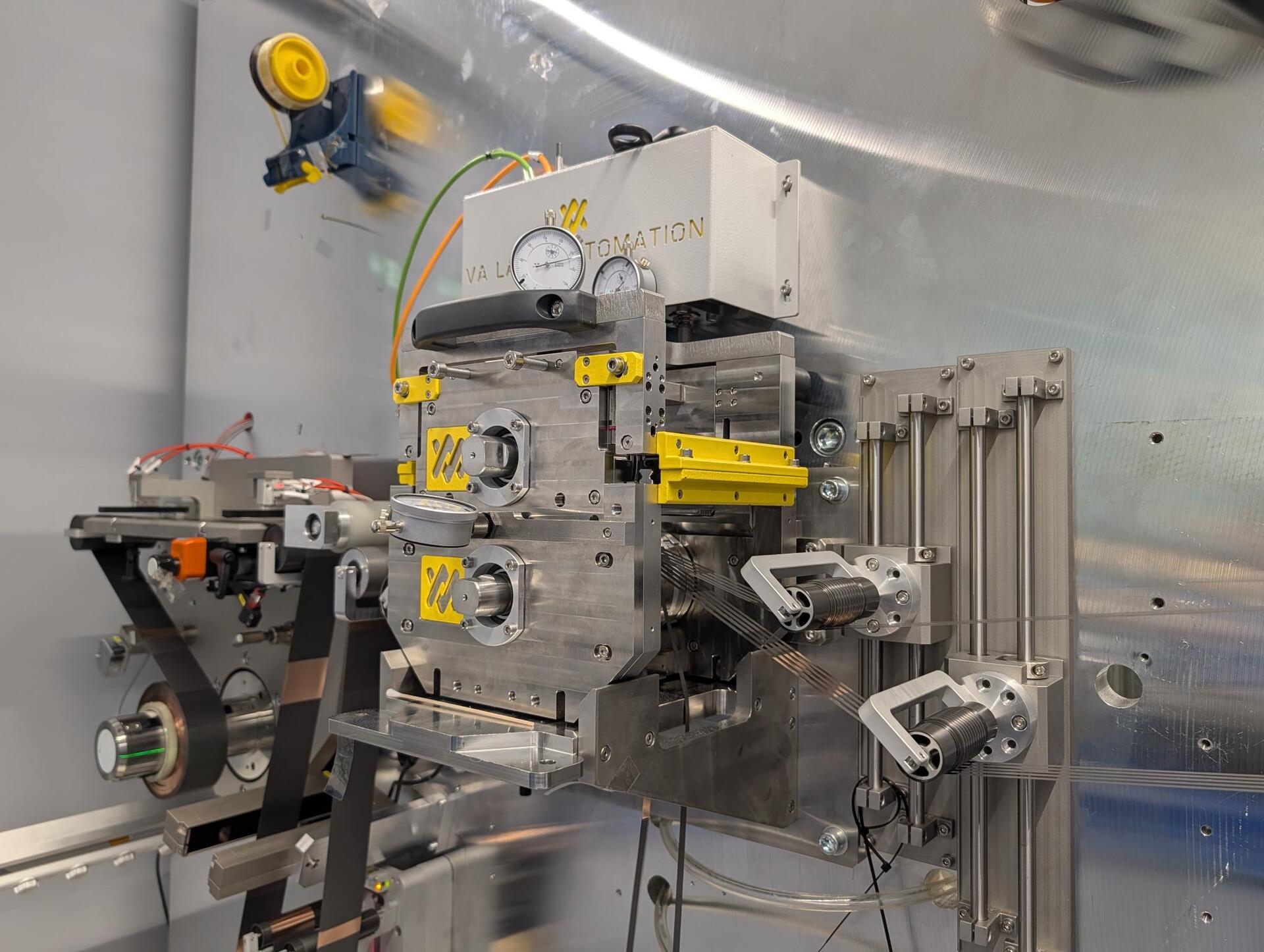
Designed as an extension to the existing cutting systems: a cutting module that is integrated into the R2R line in place of the laser or existing blade cutting process. The aim is to create a cutting set capable of processing both ceramic separators and electrode material.

The cassette, comprising the upper and lower blade shafts, is loaded and serviced as a complete unit outside the system and replaced as a single assembly. This shifts set-up and maintenance work away from the running line to the preparation area.

The module is designed for both co-directional and counter-directional cutting. For co-directional cutting, the feed is motorised both axially and radially, which significantly reduces set-up time and ensures that the set values are reproducible. For counter-directional cutting, the settings are adjusted via fine threads and then clamped, ensuring that the settings remain stable during cutting. Blade overlap and axial pressure can be finely adjusted in both variants.

Height-adjustable feed and exit rollers stabilise the strip run. The upper and lower blades can be adjusted independently of one another as a lead-in to the material speed and thus adapted to the respective cutting behaviour.

1166
1165

Laser processing cell for surface cleaning

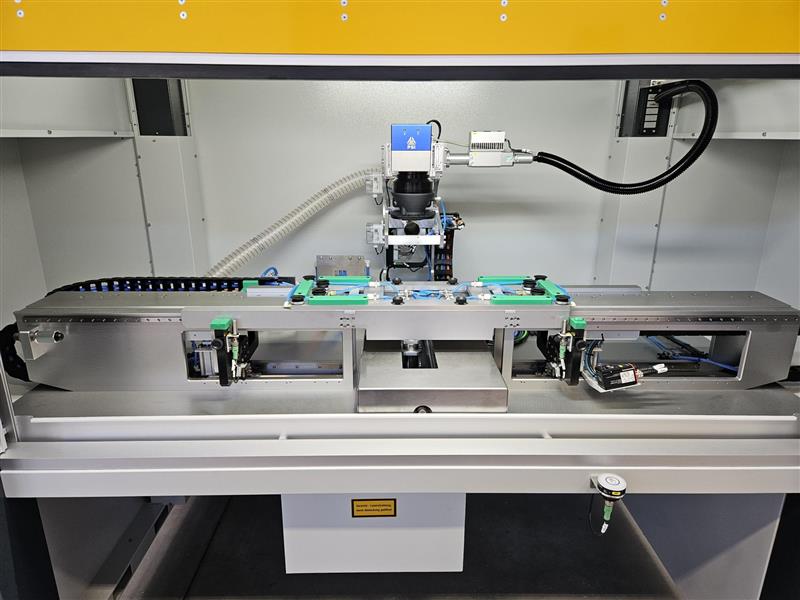
The cell processes metallic joints in continuous operation with minimal maintenance requirements. It is loaded via an automatic lift door. The processing chamber is shielded by a passive laser safety enclosure designed specifically for the laser.

The upper tool carries the console with the deflection unit. As the scanner is positioned centrally within the cell, the beam path remains strictly defined - a prerequisite for passive laser protection. Instead, it is the component that moves: highly dynamic linear motors in the lower tool position the workpiece, whilst the extraction system and cleaning tool remain stationary. This results in a more stable process with a fixed extraction position, less movement in the energy chain and fibre-optic cable, and a more cost-effective safety design.

An extraction booster regulates the flow from the machining area to the room extraction system, thereby adjusting the interaction between process gas and extraction. A vacuum sensor continuously monitors the extraction performance.

A crossjet protects the optics and directs dust directly into the extraction system. A smart camera with lighting handles position correction and process monitoring. The components are mounted on coded workpiece carriers that already contain all the clamping elements. This systematically eliminates set-up errors. Via the HMI, the operator selects the recipe and monitors the ongoing process.

Laser processing cell for metal joints

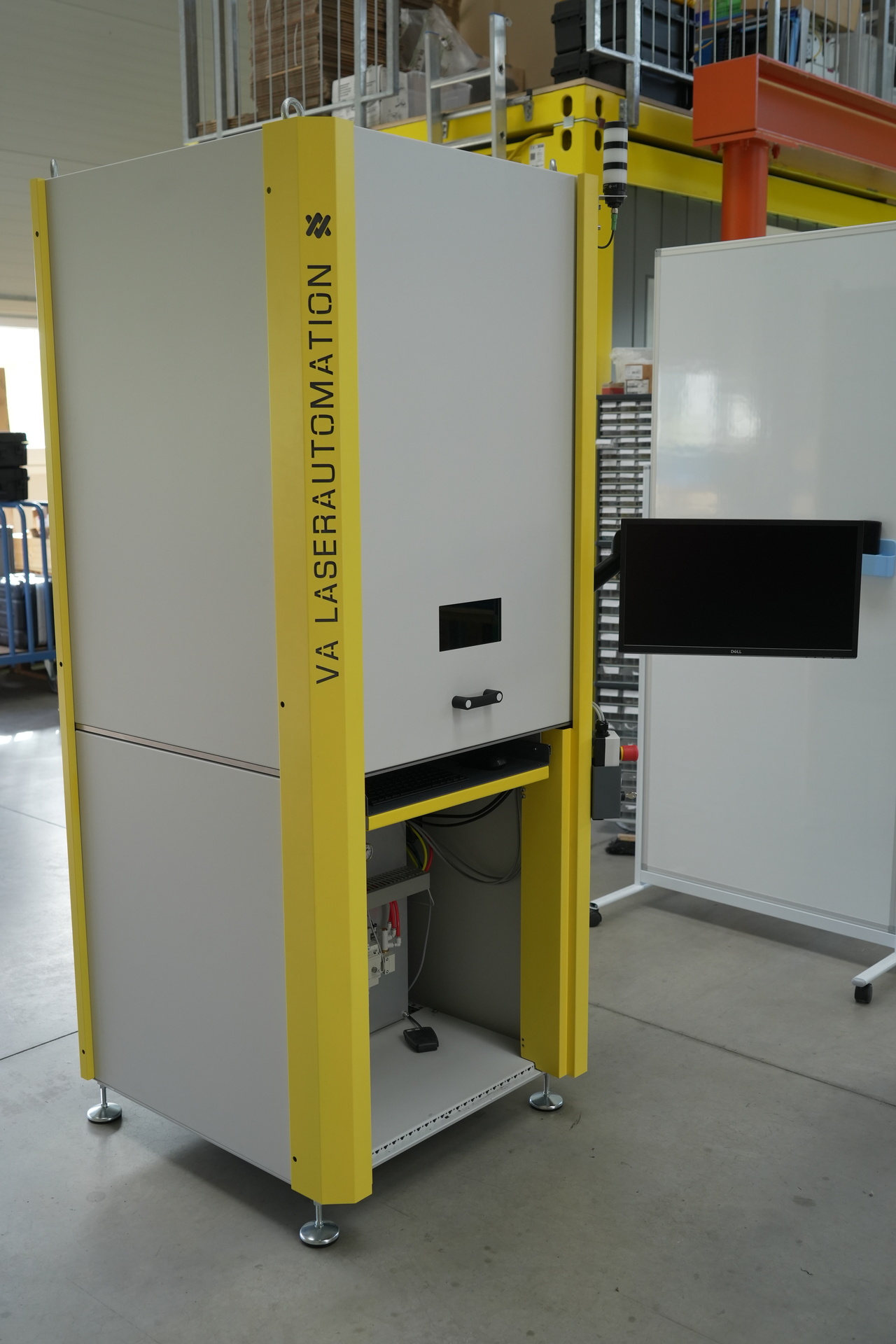
The cell is designed for the precise machining of metal joints and is intended for laboratory applications and small-batch production. It combines a manual loading process with a fully enclosed, passively laser-safe process chamber - the protective effect is based solely on the structural design and remains effective regardless of sensor status or control settings.

Access is via a manually operated, balanced lift door requiring minimal operating force. Workpiece fixtures are positioned reproducibly via a mounting plate. The integrated pneumatic connections attach clamping elements directly to the fixture. This allows fixtures to be designed for specific applications and changed quickly - an advantage for small batch sizes and test series.

The cell is operated manually via the HMI, with direct access to the process parameters. The process gas supply is monitored and regulated in accordance with defined purge times, a prerequisite for reproducible weld quality on oxidation-sensitive materials. A combined chamber and process extraction system maintains stable production conditions.

The cell is designed as a platform: instead of the manual lift door, an automatic version can be integrated, for example when transitioning to cycled series production runs. The laser source is also not fixed. The version shown operates with a 2 kW fibre laser; alternative laser types and wavelengths can be implemented.

temp 1154 für 1162